The Essential Guide to Using a Knife Honing Rod
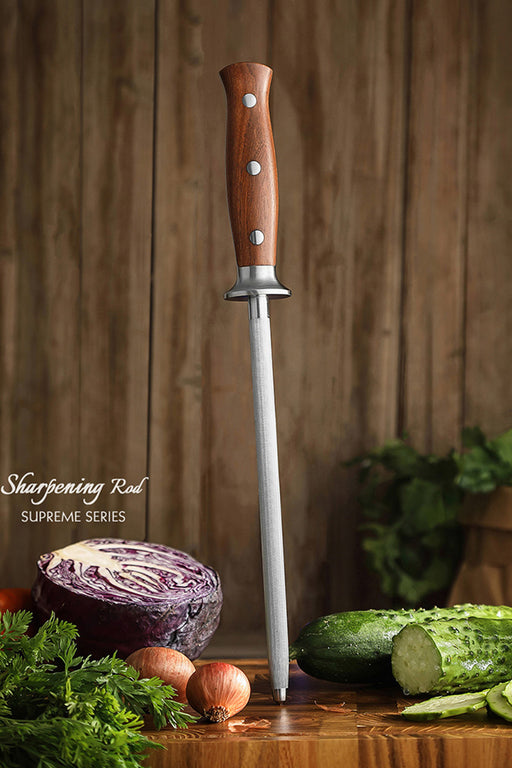
Mastering the art of knife maintenance can significantly extend the lifespan of your kitchen tools and improve their performance. A honing rod is an essential tool for maintaining the sharpness of your knives. Unlike sharpening, which removes material from the blade to create a new edge, honing realigns the existing edge, ensuring it remains straight and effective. This guide will delve into the nuances of using a honing rod, helping you maintain your knives at their peak performance.
Understanding the Difference: Honing vs. Sharpening
Many individuals confuse honing with sharpening, yet they serve different purposes in knife maintenance.
- Honing: This process involves realigning the edge of the knife. Over time, the edge of a knife can become misaligned, and honing ensures it remains straight without removing metal.
- Sharpening: This is the process of grinding the blade to create a new edge. It removes some material from the knife to restore its sharpness.
To maintain optimal knife performance, it’s crucial to regularly hone your knives and sharpen them as needed. Discover expert strategies here.
Choosing the Right Honing Rod
Selecting the appropriate honing rod depends on your specific needs and the type of knives you own. Consider the following:
- Material: Common materials include steel, ceramic, and diamond. Steel rods are durable and effective for most knives, while ceramic and diamond rods are suited for harder blades.
- Length: The rod should be longer than the blade you are honing to ensure full strokes.
- Grip: A comfortable grip ensures safe and efficient honing. Look for rods with ergonomic handles.
To explore advanced guides and tips, find out more about this approach.
How to Use a Honing Rod
Using a honing rod effectively requires technique and precision. Follow these steps to hone your knives like a professional:
Prepare Your Workspace
- Ensure your workspace is clean and free of clutter.
- Secure the honing rod by holding it vertically on a non-slip surface.
The Honing Process
- Step 1: Hold the knife at a 15 to 20-degree angle against the rod, depending on the knife’s bevel.
- Step 2: Start at the base of the blade and draw it down the rod in a sweeping motion, finishing at the tip.
- Step 3: Repeat the process on the other side of the blade, maintaining consistent angles and pressure.
- Step 4: Perform 5 to 10 strokes on each side for optimal results.
Consistent practice and correct technique ensure your knives remain sharp and ready for any culinary task. Learn about our tailored solutions for maintaining your knives.
Maintaining Your Honing Rod
Regular maintenance of the honing rod itself is essential to ensure it performs effectively:
- Cleaning: After each use, wipe the rod clean with a damp cloth to remove metal particles.
- Storage: Store the rod in a dry place to prevent rust and damage.
- Replacement: Over time, honing rods can wear out. Replace them if they become less effective.
For more comprehensive insights, explore advanced guides and tips.
In conclusion, a honing rod is an indispensable tool for any kitchen. Proper use and maintenance of your honing rod not only extend the life of your knives but also enhance their performance. Whether you are a professional chef or a home cook, understanding the intricacies of knife honing is essential. Find out more about this approach to knife maintenance and ensure your kitchen tools are always in top condition.
